

It usually starts the same way.
Someone says, “Just put it in the spreadsheet.”
And for a while, that works. Until it doesn’t. Until version control turns into a guessing game. Until someone updates the wrong column. Until a client falls through the cracks and nobody can quite explain how.
Growth didn’t break your system. It revealed it.
The Moment Chaos Becomes Visible
Here’s the uncomfortable truth: most organizations don’t outgrow their tools—they outgrow their tolerance for inefficiency.
At ten cases, you can wing it. At fifty, you start double-checking things. At one hundred? You’re building workarounds for your workarounds.
Modern case management systems exist for this exact moment. Not as shiny upgrades, but as course correction.
One Record to Rule Them All (Finally)
Let’s talk about the mess.
Client notes in email. Intake forms in PDFs. Updates buried in Slack threads. Someone’s desktop folder named “FINAL_v3_REAL.”
A modern system shuts that down.
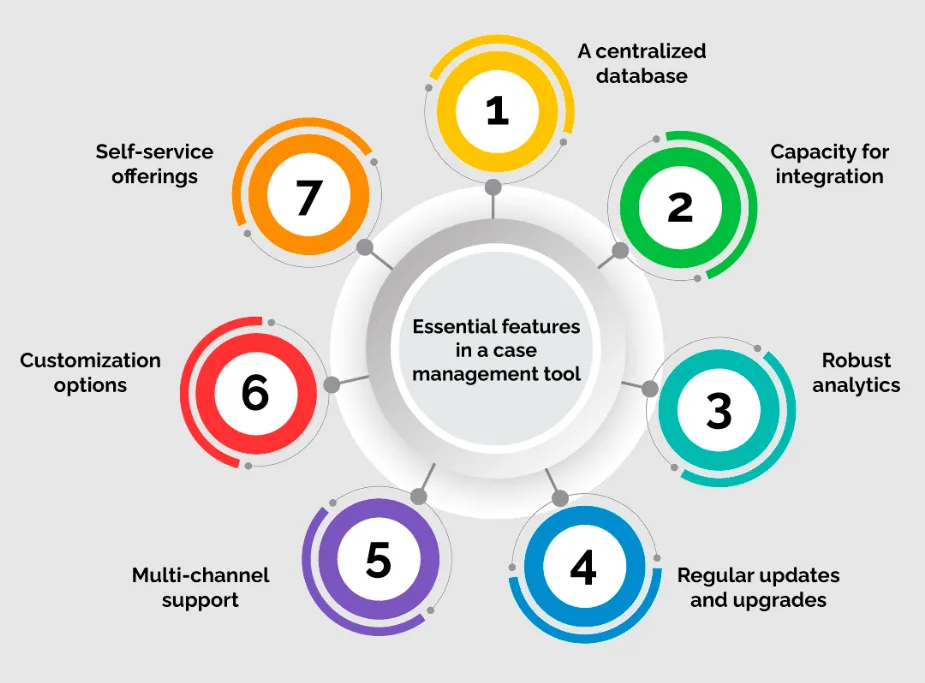
Everything—case history, documents, interactions—lives in one place. Clean. Searchable. Structured. No scavenger hunts required. This kind of centralized visibility has long been considered foundational in effective service delivery, especially in sectors managing complex client data .
And suddenly, onboarding a new team member doesn’t feel like handing them a detective novel.
Automation That Doesn’t Feel Like a Robot Took Over
Automation gets a bad reputation.
People hear it and think: rigid, clunky, impersonal. But modern systems? They’re smarter than that.
They nudge instead of dictate.
Follow-ups happen automatically. Deadlines don’t get “forgotten.” Status updates trigger the next step without someone manually moving things along. It’s less about replacing humans—and more about removing the repetitive friction that drains them.
You still make decisions. You just stop babysitting the process.
Dashboards That Actually Tell You Something
Data is everywhere. Insight is not.
Modern reporting flips that dynamic.
Instead of exporting spreadsheets and squinting at rows, you get real-time dashboards that show exactly what matters—case progress, team performance, service gaps. It’s the same shift seen in high-performing QA environments, where immediate feedback drives better outcomes .
Translation: fewer meetings that could’ve been dashboards.
Security Isn’t a Feature—It’s the Floor
If your system handles sensitive information (and it probably does), “we’ll deal with security later” isn’t a strategy.
It’s a liability.
Modern platforms bake in compliance from day one—role-based access, encrypted data, audit trails. Not flashy. Not optional. Just necessary.
Because trust, once lost, doesn’t come back with a software update.
It Plays Well With Others (Because It Has To)
No one wants another isolated tool.
Your CRM, your accounting software, your communication platforms—they all need to talk to each other. Modern case management systems are built with this in mind, integrating across your stack so data flows instead of bottlenecks.
No more copying and pasting the same information five times. (We’ve all done it. Nobody enjoys it.)
Work Happens Everywhere Now—Your System Should Too
Desks are optional. Access isn’t.
Whether your team is in the field, remote, or somewhere in between, mobile accessibility isn’t a luxury—it’s survival. Updates happen in real time. Notes get logged on the spot. Decisions don’t wait until someone gets back to the office.
Speed becomes a feature.
Growth Without the Rebuild
Here’s the real test: what happens when you double your caseload?
If the answer is “we’ll figure something else out,” you don’t have a system—you have a temporary solution.
Modern platforms scale with you. More users, more cases, more complexity—without forcing you to start from scratch every six months.
For teams looking to move past patchwork workflows, exploring platforms like case management systems offers a clearer sense of what scalable infrastructure actually looks like in practice.
Final Thought: Systems Are Culture, Just in Software Form
You can tell a lot about an organization by how it handles information.
Messy systems create reactive teams. Clear systems create confident ones.
And while no platform fixes everything overnight, the right case management system does something subtle but powerful—it removes the chaos that shouldn’t have been there in the first place.
Which, honestly, is half the battle.