

Bridging the Gap Between Virtual and Physical Play
For decades, the online gaming sector was defined by solitary experiences. Players interacted with digital interfaces governed entirely by Random Number Generators (RNGs). While efficient, these digital simulations often lacked the atmosphere and social dynamic characteristic of traditional brick-and-mortar establishments. The industry has since undergone a significant transformation, moving away from purely algorithmic gameplay toward high-production, real-time entertainment broadcasts known as live dealer gaming.
This segment of the iGaming market combines the convenience of online access with the tangible elements of physical casinos. It involves streaming games in real-time from purpose-built studios or actual casino floors, managed by human dealers. This shift is not merely cosmetic; it fundamentally changes the player’s relationship with the game, substituting computer graphics with live video feeds and interactive features. The focus has moved from simply providing a betting interface to delivering a comprehensive entertainment product that mirrors television broadcasts in its production quality.
The Technological Infrastructure of Live Studios
The execution of a seamless live dealer experience relies on a complex interplay of hardware and software solutions designed for low-latency broadcasting. Unlike standard video streaming, casino broadcasts require two-way communication and instant data processing to ensure game integrity.
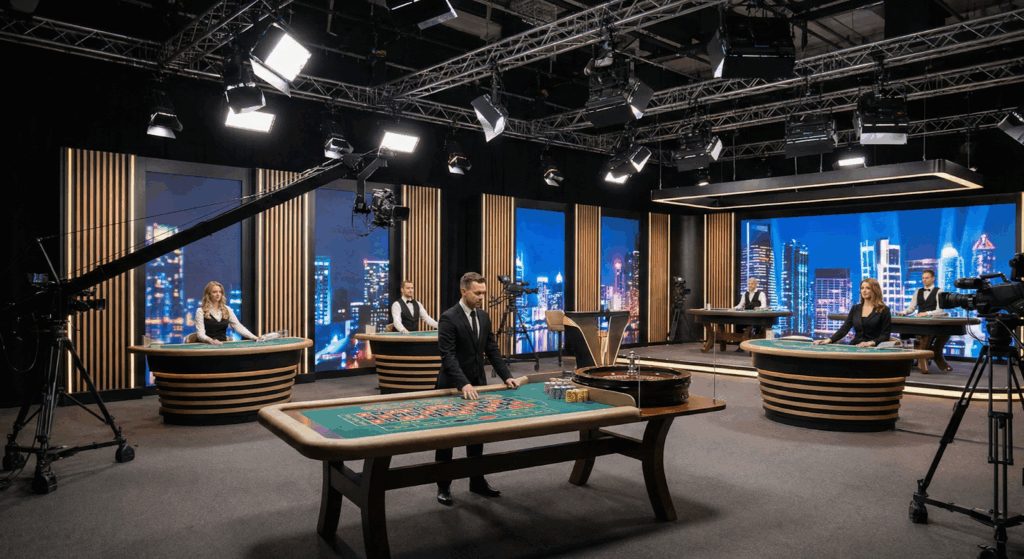
The core of this operation is the studio environment, which is equipped with broadcast-quality cameras, professional lighting, and high-quality audio gear. Crucial to the gameplay is Optical Character Recognition (OCR) technology. OCR software records every detail in the gaming room, including shuffled cards or the landing position of a roulette ball. This visual data is instantly converted into digital format, allowing the software to register results, update player balances, and display winning numbers on the user interface without perceptible delay.
Furthermore, each table typically utilizes a Game Control Unit (GCU). This hardware device encodes the video data that is transmitted to the player. The combination of OCR and GCU ensures that the physical actions of the dealer are perfectly synchronized with the digital overlay the player interacts with on their screen.
Key Segments of Live Entertainment
The live gaming sector has diversified significantly beyond traditional casino staples, creating distinct categories catering to different player preferences.
Classic Table Games Reimagined
The foundation of live gaming remains classic tables such as Blackjack, Baccarat, and Roulette. However, the digital format allows providers to introduce variations that are difficult to implement in physical venues.
For instance, standard European Roulette is often supplemented by variants featuring random multipliers called “quantum” or “lightning” mechanics. In these versions, specific straight-up numbers are assigned boosted payout potentials before each spin. While the core rules remain, these additions alter the game’s volatility profile, offering potentially higher payouts in exchange for a modified paytable on standard bets. Similarly, Blackjack variants may include side bets or rules allowing for an unlimited number of players to bet behind a single seat, increasing accessibility.

The Rise of the Game Show Format
Perhaps the most significant deviation from traditional gambling is the emergence of the live game show category. These games prioritize entertainment value and visual spectacle over pure skill or traditional betting structures.
Inspired by television formats, these games often feature charismatic presenters, elaborate sets, and central mechanics like giant money wheels or bingo-style drawings. Titles in this category often incorporate bonus rounds involving augmented reality (AR) or secondary animated screens. The pacing is different from table games, with a greater emphasis on the host’s interaction with the audience and the anticipation built during broadcast segments. The appeal here lies less in strategic gambling and more in participating in a shared, interactive viewing experience.
Understanding Player Trust and Interaction
One of the primary drivers for the adoption of live dealer games is the perception of transparency. While reputable RNG games are audited for fairness and adhere to published Return to Player (RTP) percentages, some players remain skeptical of purely digital outcomes.
Seeing physical cards being shuffled from a fresh shoe or watching a real ball decelerate on a roulette wheel provides a level of tangible reassurance that an algorithm cannot replicate. The broadcast nature of the games allows players to verify the action with their own eyes in real-time.
Additionally, the integration of live chat functions has reintroduced the social dimension that was previously absent online. Players can communicate with the dealer and, in some cases, other participants. This interaction turns a solitary activity into a communal one, where the dealer acts not just as a game facilitator, but as a host responsible for maintaining an engaging atmosphere.
Navigating the Variety of Live Options
The rapid expansion of this sector has led to a saturated market with numerous software providers, each offering unique studio aesthetics, dealer training standards, and rule variations. A game of Blackjack from one provider may differ significantly from another in terms of streaming quality, user interface, or specific rules regarding splitting and doubling down.
For players focused on specific game dynamics, understanding these differences is crucial. Factors such as table limits, language options, and the specific volatility introduced by multiplier mechanics vary across different studios. Given the complexity and variety of these broadcast environments, resources that act as a Live Casino Comparer become valuable for analyzing the distinct features of different providers and game variants, helping users understand the product landscape without financial commitment.
Future Outlook for Broadcast Gaming
The trajectory of live online gaming points towards increasingly immersive experiences. Providers are already experimenting with virtual reality (VR) integration, aiming to place the player “inside” the studio environment. Furthermore, the use of chroma key technology (green screens) allows for highly customizable and thematic backgrounds, enabling studios to change the visual setting instantly. As internet infrastructure improves and streaming latency decreases further, the line between a high-end television broadcast and an interactive casino game will likely continue to blur.